Level 3 Diploma in Massage Therapy
Gain four practical massage qualifications & progress towards a regulated Level 3 Diploma
Would you like to build a professional massage career with more than one treatment to offer?
The Focus Awards Level 3 Diploma in Massage Therapy gives you a broad foundation in professional massage and complementary therapy.
You will train in:
- body massage;
- massage using pre-blended aromatherapy oils;
- hot stone massage;
- Indian head massage.
You will also develop your knowledge of anatomy and physiology, client consultation, health and safety, professional communication, personal wellbeing and the principles of complementary and alternative medicine.
Your training follows a clear pathway.
You will first complete the practical training and case studies required for our CPD massage courses. After successfully completing each CPD stage, you will receive the relevant CPD certificate.
Subject to suitable insurance and any local requirements, this may allow you to begin offering the treatment while continuing with the additional assignments and practical observations required for the regulated Level 3 Diploma.
The CPD courses and your progression towards the regulated qualification are included within the overall course fee.
Your route to becoming a qualified massage therapist
The programme is completed in stages rather than expecting you to learn four different massage treatments at once.
For each practical massage discipline, you will:
- Complete the required theory and preparation.
- Attend hands-on practical training where required.
- Practise the treatment on models.
- Complete the required CPD case studies.
- Receive your CPD certificate once your work has been approved.
- Continue with the additional workbook assignments and regulated practical observations.
- Build your portfolio towards the full Focus Awards Level 3 Diploma.
This means you can develop your skills gradually, gain confidence and potentially begin earning from completed treatments while continuing towards the full regulated qualification.
Who this course is for
This course may be suitable for you if you:
- are new to massage and want a broad professional qualification;
- want to build a massage or complementary therapy business;
- already offer beauty, facial or holistic treatments and want to add massage;
- want to offer several massage treatments rather than completing separate unrelated courses;
- want hands-on practical training rather than online-only learning;
- want to gain CPD certificates while progressing towards a regulated qualification;
- want to develop both practical treatment skills and underpinning theory;
- need flexible home study that can fit around work or family commitments;
- want a strong foundation before progressing to advanced or specialist massage.
No previous massage qualification is required.
However, this is a substantial programme. You must be prepared to complete home study, practical training, case studies, a workbook of assignments and formal practical observations.
What is included?
The qualification includes training and assessment in:
Body massage
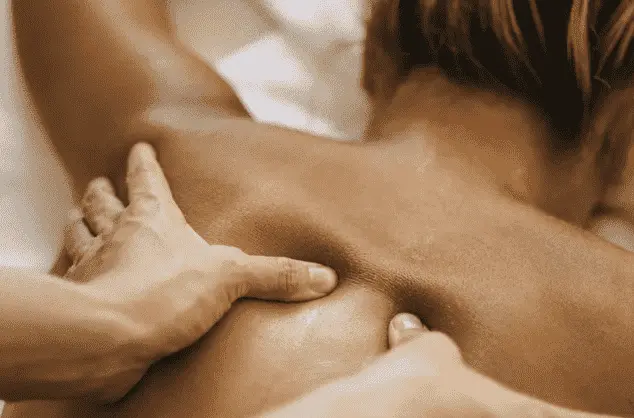
You will learn how to prepare for and provide a professional full-body massage using appropriate techniques and massage mediums.
Pre-blended aromatherapy massage
You will learn how to select and use professionally prepared aromatherapy blends within a massage treatment.
Hot stone massage
You will learn how to prepare, heat, handle and use different massage stones safely within a professional treatment.
Indian head massage
You will learn how to provide a seated massage treatment focusing on areas such as the upper back, shoulders, neck, scalp and face.
Origins and principles of massage
You will explore the development of massage and the relationship between complementary, alternative and conventional healthcare.
Client care and communication
You will learn how to consult professionally, identify client needs, manage expectations and maintain appropriate treatment records.
Health and safety
You will develop the knowledge and practical standards required to maintain a safe massage environment.
Personal health and wellbeing
You will explore how therapists can protect their own physical and emotional wellbeing while working in a physically demanding profession.
What you will learn
Throughout the programme, you will learn how to:
- prepare yourself and your treatment area;
- maintain hygiene and infection-control standards;
- carry out a professional client consultation;
- gather relevant health and lifestyle information;
- identify contraindications and treatment cautions;
- recognise when medical referral may be appropriate;
- agree realistic treatment objectives;
- select suitable massage techniques;
- choose an appropriate massage medium;
- position and support the client safely;
- maintain client comfort, dignity and privacy;
- adapt pressure and technique;
- perform massage movements safely and effectively;
- monitor the client’s response;
- give appropriate aftercare;
- complete consultation and treatment records;
- evaluate treatment results;
- reflect on and improve your practice;
- protect your own posture, joints and physical wellbeing.
You will also develop the underpinning knowledge needed to understand how massage may affect the body and why treatments must be adapted for each client.
Why this programme is different
Some massage courses provide a brief demonstration followed by an attendance certificate.
This pathway requires you to demonstrate your knowledge and practical ability through:
- detailed home study;
- tutor-led practical training;
- work on models;
- CPD case studies;
- written assignments;
- formal practical observations;
- a portfolio of evidence;
- internal assessment and quality assurance.
You do not receive a CPD certificate simply for attending a training day.
You must complete the required case studies and demonstrate that you can carry out the treatment safely and competently.
The regulated diploma then goes further by requiring additional theory and formal assessment of your practical competence.
Stage 1: Complete the CPD courses
The CPD pathway allows you to develop one treatment at a time.
Once you have completed the relevant practical training and case studies successfully, you will receive the CPD certificate for that treatment.
The CPD certificates do not mean that the full regulated diploma has been completed. They confirm that you have successfully completed individual stages within the wider training programme.
Body massage training
Body massage provides the main practical foundation for the programme.
You will begin by completing the required theory and preparatory coursework.
You will then attend two full days of hands-on practical training, working on a range of models.
During the practical training, you will learn how to:
- prepare the massage environment;
- complete a client consultation;
- position and support the client;
- select suitable massage mediums;
- apply massage movements safely;
- adapt pressure and technique;
- massage different areas of the body;
- maintain an appropriate flow and sequence;
- protect client dignity;
- work with appropriate posture and body mechanics;
- provide aftercare;
- clean and prepare the treatment area between clients.
Five body massage CPD case studies
Following the practical training, you will complete five body massage case studies.
These will allow you to demonstrate that you can:
- consult with different clients;
- plan an appropriate treatment;
- identify contraindications;
- choose suitable techniques and products;
- adapt the massage;
- work safely and professionally;
- record treatment details;
- evaluate your results.
Once the five case studies have been successfully completed and approved, you will receive your CPD body massage certificate.
Hot stone massage training
You will complete the required theory before attending a full day of practical hot stone massage training.
You will learn how to:
- prepare and check the stone heater;
- select appropriate stones;
- heat and test stones safely;
- position stones appropriately;
- incorporate heated stones into a massage;
- use stones as massage tools;
- maintain a safe working temperature;
- monitor the client’s response;
- recognise contraindications and cautions;
- clean and store the stones and equipment safely.
Your training will include appropriate use of stones such as basalt, marine, marble or semi-precious stones where relevant to the course and equipment being used.
Three hot stone CPD case studies
Following your practical training, you will complete three hot stone massage case studies.
Once your case studies have been completed successfully and approved, you will receive your CPD hot stone massage certificate.
Indian head massage training
You will complete the required theory before attending a full day of practical Indian head massage training.
You will learn how to:
- prepare the client and treatment area;
- position the client safely and comfortably;
- assess relevant contraindications;
- massage the upper back and shoulders;
- work safely around the neck;
- perform appropriate scalp techniques;
- include facial techniques where suitable;
- adapt pressure and positioning;
- maintain client comfort;
- provide aftercare.
Three Indian head massage CPD case studies
Following your practical training, you will complete three Indian head massage case studies.
Once your case studies have been successfully completed and approved, you will receive your CPD Indian head massage certificate.
Pre-blended aromatherapy massage
You will develop your understanding of massage using professionally produced pre-blended aromatherapy oils.
You will learn about:
- the role of pre-blended aromatherapy products;
- safe product selection;
- consultation and contraindications;
- checking allergies and sensitivities;
- choosing a suitable blend;
- incorporating the blend into a massage;
- safe storage and handling;
- client aftercare;
- working within the limits of pre-blended aromatherapy training.
This course does not qualify you to formulate bespoke essential-oil blends or practise as a clinical aromatherapist.
Three pre-blended aromatherapy massage CPD case studies
You will complete three case studies using suitable pre-blended aromatherapy oils.
Once your case studies and any required CPD evidence have been completed successfully and approved, you will receive the relevant CPD certificate.
When can you begin offering treatments?
You cannot begin offering a treatment professionally simply because you have attended the practical training.
You must first complete the required CPD course elements and case studies and receive the relevant CPD certificate.
Before treating paying clients, you must:
- obtain suitable professional insurance;
- confirm that your insurer accepts the CPD certificate;
- meet any licensing or local authority requirements;
- work only within the treatments and techniques covered by your training;
- use suitable professional products and equipment;
- maintain appropriate consultation and treatment records.
Once these requirements have been met, you may be able to begin offering the completed treatment while continuing towards the regulated diploma.
Stage 2: Complete the regulated qualification
The CPD certificates form the first practical stage of the programme.
To achieve the Focus Awards Level 3 Diploma in Massage Therapy, you must then complete the additional regulated requirements.
These include:
- the workbook of written assignments;
- three body massage observations;
- four hot stone massage observations;
- three Indian head massage observations;
- three pre-blended aromatherapy massage observations;
- all additional portfolio evidence required across the mandatory units.
The regulated diploma will only be awarded once all work has been successfully completed, assessed and quality assured.
Your assignment workbook
The regulated workbook allows you to demonstrate the depth of knowledge required for the full diploma.
Your assignments will cover areas including:
- the history and development of massage;
- complementary, alternative and conventional medicine;
- professional boundaries;
- client care and communication;
- anatomy and physiology relevant to massage;
- treatment planning;
- contraindications and cautions;
- body massage procedures;
- pre-blended aromatherapy massage;
- hot stone massage;
- Indian head massage;
- health and safety;
- risk assessment;
- personal health and wellbeing;
- therapist posture and working practices;
- professional development.
Your tutor or assessor will mark your work and provide feedback.
Where an answer does not yet meet the required assessment criteria, you will be asked to provide further information or make corrections.
This is a normal part of completing a regulated qualification.
Regulated practical observations
Formal observations allow your assessor to confirm that you can consistently provide treatments safely and competently.
You will complete:
- three body massage observations;
- four hot stone massage observations;
- three Indian head massage observations;
- three pre-blended aromatherapy massage observations.
Observations may be carried out face-to-face or remotely where this is appropriate, permitted and agreed with your assessor.
During an observation, your assessor may review:
- preparation and hygiene;
- client consultation;
- identification of contraindications;
- treatment planning;
- product and equipment selection;
- client positioning;
- practical massage technique;
- pressure, rhythm and flow;
- safe use of equipment;
- treatment adaptation;
- client care and communication;
- therapist posture;
- aftercare;
- treatment records;
- evaluation of the treatment.
You must demonstrate consistent competence rather than performing the treatment correctly on only one occasion.
How the diploma is assessed
The qualification is internally assessed through a portfolio of evidence.
Your portfolio may include:
- the assignment workbook;
- consultation records;
- treatment plans;
- CPD case studies;
- assessor observation records;
- client feedback;
- professional discussions;
- written or oral questions;
- risk assessments;
- treatment evaluations;
- reflective accounts;
- photographs or videos where appropriate and consented to;
- any additional evidence requested by your assessor.
All evidence must be assessed and internally quality assured before the regulated qualification certificate can be issued.
Tutor and assessor support
You will be allocated a tutor or assessor who will guide you through the programme.
Your tutor will:
- explain the requirements for each stage;
- provide guidance on your home study;
- help you prepare for practical training;
- teach and demonstrate the massage techniques;
- provide feedback during practical sessions;
- assess your CPD case studies;
- support you with the regulated workbook;
- identify corrections or additional evidence;
- prepare you for your practical observations;
- assess your practical competence;
- guide you towards completing the regulated diploma.
You will need to take responsibility for:
- completing your home study;
- attending practical training;
- arranging suitable models;
- practising between training sessions;
- completing your case studies;
- submitting assignments;
- acting on tutor feedback;
- completing observations within the agreed timescale.
Qualification details
Qualification: Focus Awards Level 3 Diploma in Massage Therapy (RQF)
Qualification number: 603/3844/1
Qualification level: Level 3
Credit value: 52 credits
Guided learning hours: 450 hours
Total qualification time: 520 hours
Minimum learner age: 16
Formal learner entry requirements: None
Although there are no formal entry requirements, you must be physically able to carry out massage treatments and prepared to complete a substantial programme of theory, practice and assessment.
Please tell us about any health condition, injury or accessibility need that may affect your practical training so that appropriate support or reasonable adjustments can be considered.
Mandatory units
To achieve the regulated diploma, you must complete all mandatory units.
Explore the Origins of Massage and Principles of Complementary and Alternative Medicine
You will explore:
- the historical development of massage;
- the diversity of massage traditions;
- the difference between complementary, alternative and conventional medicine;
- the role of massage within modern wellbeing and healthcare;
- professional progression routes.
Provide Body Massage
You will develop the knowledge and practical skills required to prepare for and provide professional body massage treatments.
Provide Massage Using Pre-Blended Aromatherapy Oils
You will learn how to use professionally prepared aromatherapy blends safely within massage treatments.
Client Care and Communication in Beauty-Related Industries
You will learn how to communicate professionally, complete effective consultations and manage client needs and expectations.
Apply Hot Stone Massage
You will learn how to prepare, heat and apply massage stones safely within a professional treatment.
Monitor and Maintain Health and Safety Practice in the Salon
You will learn how to identify hazards, assess risks and maintain safe working practices.
Maintaining Personal Health and Wellbeing
You will explore how to protect your physical and emotional health while working as a massage therapist.
Provide Indian Head Massage
You will develop the knowledge and competence required to prepare for and provide Indian head massage.
Your personal health and wellbeing
Massage is physically demanding.
This qualification includes a specific unit on maintaining personal health and wellbeing because your ability to work safely matters just as much as the client’s experience.
You will consider areas such as:
- posture;
- body mechanics;
- protecting the hands, wrists, shoulders and back;
- managing workload;
- rest and recovery;
- physical activity;
- hydration and nutrition;
- stress management;
- professional boundaries;
- recognising signs of fatigue or burnout.
Good technique should protect the practitioner as well as benefit the client.
Products and equipment
You will need access to suitable products and equipment for your practical training, CPD case studies and regulated observations.
Your massage products may include:
- massage oils;
- massage creams;
- powder;
- massage gel;
- wax or balm;
- suitable pre-blended aromatherapy oils.
You will also need access to:
- a professional massage couch;
- couch roll;
- suitable towels and coverings;
- bolsters or support cushions;
- hygiene and cleaning products;
- consultation and treatment records;
- a professional hot stone kit;
- an appropriate stone heater;
- stones required for the training and assessment.
The current course requirements may include basalt, marine, marble and semi-precious stones.
Your tutor will confirm the exact kit and equipment requirements before you purchase anything.
Please do not buy a full kit until you have spoken to your trainer.
Training locations
Practical training is available at selected Jane Bryan Beauty Training centres, including:
- Tunbridge Wells, Kent;
- Whitley Bay, Tyne and Wear;
- Rotherham, Yorkshire.
Dates and availability vary between centres.
Course fee
The total course fee is £2,300.
This includes a £425 booking and registration fee.
The programme fee covers:
- the CPD training pathway;
- body massage practical training;
- hot stone massage practical training;
- Indian head massage practical training;
- training in pre-blended aromatherapy massage;
- assessment of the required CPD case studies;
- the relevant CPD certificates;
- the regulated assignment workbook;
- the required practical observations;
- assessment and internal quality assurance towards the regulated diploma.
VAT may apply depending on the Jane Bryan Beauty Training centre through which you enrol, as not all centres are VAT registered.
Your chosen centre will confirm:
- the total amount payable;
- whether VAT applies;
- the payment schedule;
- what learning materials are included;
- whether products and equipment are purchased separately;
- any additional costs.
Unless your centre confirms otherwise, you should assume that your professional kit and equipment are purchased separately.
Why complete the full regulated diploma?
The CPD certificates allow you to develop and demonstrate competence in individual massage treatments.
The regulated diploma brings these treatments together within a broader and more formally assessed professional qualification.
The full diploma requires you to demonstrate:
- wider underpinning knowledge;
- understanding of massage history and principles;
- professional client care;
- health and safety;
- personal wellbeing;
- consistent practical competence;
- the ability to adapt treatments;
- completion of a detailed assignment workbook;
- successful performance across multiple formal observations.
Completing the regulated diploma gives you a substantial qualification covering several professional massage disciplines rather than a collection of short, disconnected courses.
What this programme does not include
The course does not include:
- automatic certification after attending practical training;
- clinical aromatherapy formulation;
- medical diagnosis;
- physiotherapy;
- sports injury diagnosis or rehabilitation;
- deep-tissue or sports massage unless separately stated;
- guaranteed insurance or local licensing;
- equipment and products unless confirmed by your centre.
The CPD certificates are awarded only after the relevant training and case-study requirements have been completed successfully.
The regulated diploma is awarded only after all assignments, observations and portfolio requirements have been met.
Frequently asked questions
Is this a CPD course or a regulated qualification?
It is a pathway that includes both.
You first complete the relevant CPD massage training and case studies. Once each CPD stage has been completed successfully, you receive the appropriate CPD certificate.
You then continue with the workbook assignments and formal observations required for the regulated Focus Awards Level 3 Diploma.
Do I receive more than one certificate?
Yes.
You may receive separate CPD certificates as you successfully complete the practical massage courses and their required case studies.
You will receive the separate Focus Awards Level 3 Diploma certificate only after completing all units, assignments, observations and portfolio requirements.
Do I need previous massage experience?
No formal previous qualification is required.
The course can provide a route into professional massage, but you must be prepared for substantial practical work, independent study and assessment.
Is the course online?
No.
The theory and written assignments are completed through supported home study, but the programme also includes practical training, models, case studies and formal observations.
How many practical training days are included?
Body massage includes two full practical days.
Hot stone massage includes one full practical day.
Indian head massage includes one full practical day.
Your trainer will confirm the practical arrangements for pre-blended aromatherapy massage.
How many CPD case studies will I complete?
You will complete:
- five body massage case studies;
- three hot stone massage case studies;
- three Indian head massage case studies;
- three pre-blended aromatherapy massage case studies.
When do I receive each CPD certificate?
You will receive the relevant CPD certificate after successfully completing the required theory, practical training where applicable and the specified case studies.
Your tutor must approve your work before the certificate can be issued.
Can I begin treating paying clients after receiving a CPD certificate?
Potentially, provided:
- the relevant CPD certificate has been awarded;
- you have suitable professional insurance;
- your insurer accepts the qualification;
- you meet local licensing requirements;
- you work within the limits of your training and competence.
You should confirm this directly with your insurer.
What is required for the regulated qualification?
You must complete:
- the regulated assignment workbook;
- three body massage observations;
- four hot stone massage observations;
- three Indian head massage observations;
- three pre-blended aromatherapy massage observations;
- all additional evidence required for the portfolio.
Can I stop after completing the CPD courses?
The programme is sold as a pathway towards the regulated diploma.
You should discuss the enrolment terms, registration period and consequences of not completing the regulated stage with your centre before booking.
Are the observations face-to-face?
Observations may be completed face-to-face or remotely where appropriate, permitted and agreed with your assessor.
Your trainer will confirm the arrangements.
Is a kit included?
Unless your centre confirms otherwise, products and equipment are purchased separately.
You will need suitable kit for practical training, case studies and observations.
Will I be qualified as an aromatherapist?
No.
The programme teaches massage using professionally prepared pre-blended aromatherapy oils.
It does not qualify you to create individual essential-oil blends or practise as a clinical aromatherapist.
Will this qualify me as a sports massage therapist?
No.
Body massage and sports massage are different qualifications.
You would need additional sports massage training and assessment.
How long will the diploma take?
The qualification has 450 guided learning hours and 520 total qualification hours.
The actual completion time will depend on:
- your available study time;
- practical training dates;
- access to models;
- completion of the CPD case studies;
- the speed and standard of your workbook submissions;
- observation availability;
- whether corrections or additional evidence are required;
- internal quality assurance.
Your trainer will explain the expected timescale and any enrolment deadline before you begin.
Will I receive tutor support?
Yes.
Your tutor or assessor will support you through the theory, practical training, CPD case studies, regulated workbook and observations.
Is this the right course for you?
This programme may be appropriate if you:
- want a broad professional foundation in massage;
- want to learn several massage treatments;
- value hands-on practical training;
- want to gain CPD certificates during your learning;
- want the opportunity to begin building experience while continuing your studies;
- want to progress towards a regulated diploma;
- are prepared to complete a substantial workbook;
- can arrange suitable models;
- can complete all required case studies and observations;
- are willing to practise and act on feedback.
It may not be appropriate if you:
- only want a brief massage taster course;
- want to learn only one massage treatment;
- are looking for sports or clinical massage;
- cannot attend the practical training;
- cannot access models;
- do not want to complete written assignments;
- do not intend to complete formal observations.
Please contact us before enrolling if you are unsure which massage pathway is most appropriate.